PRISMS OF LIGHT
PIE
What does PIE have to do with photography?
Photography is essentially Drawing With Light. The word photography was created from the Greek roots φωτός (phōtos), genitive of φῶς (phōs), "light" and γραφή (graphé) "representation by means of lines" or "drawing", together meaning "drawing with light". Both greek words derive from the older language, Proto-Indo-European or PIE. Interestingly photo and beacon are both derived from the same word in PIE as well as graph and carve or carving come from the same word in PIE. So photography could literally mean bright carving. Working with light is fundamental in photography. Similar to painting on a canvas, images are painted by capturing light on film or a digital sensor. Simply put, no light, no image. Dark objects absorb more light and reflect less to the camera, so they look dark. Bright objects reflect more light and look brighter. The difference between the two is considered the dynamic range. Ansel Adams put these darks and lights into zones. He considered 10 zones for each scene. For most photography, zone 3 or III to zone 7 or VII are of most concern. Anything darker or lighter than items in those zones will come out looking all black or all white. Colors too can be placed in these zones but colors are defined by wavelengths and frequencies of the light.
Learn to See Light
Understanding light, and knowing that not all light is created equal is a learned skill and not one to easily master. Composition and exposure aside, learning to "see" light is a key element in making good images.
Light Properties
Light has basic properties that can influence images
Intensity - Direction - Color Quality
Different types of images have different concerns when it comes to light. See below for descriptions of these properties
Intensity
How much light do you have? Can you control it? Being indoors does not mean you can control the intensity of the light. Portrait studios will have light setups to provide the ideal light, but other settings can vary. Candles will give a different light than fluorescent lights. If you are outdoors, your light is controlled by the environment. Is it a sunny day or cloudy day? Are you in the shade or a covered area? There are options that can be used to overcome the intensity of the available light. Too much light and you will need to change your aperture or shutter speed or lower your ISO setting. a smaller aperture (bigger number f11 or f16) or a faster shutter speed will let in less light and a lower ISO will be less sensitive to light. There might be times when you will adjust all 3 and you will still have too much light for the image you want to make. There are filters that you can add to the end of your lens that can decrease the amount of light. Discussion on filters is beyond this steps scope. The opposite of too much light is a scene where there isn't enough. These often require a tripod to allow the shutter to be open for a longer period of time than can be held steady by your hand. You can add light to the scene using artificial light such as a flash unit or a reflecting panel. You can also control the light's intensity by controlling the distance of the light source from the subject. Light falls off at the square of the distance. Meaning moving twice as far away from the light, or doubling the distance between you and the light will result in 1/4 as much light. This is known as the inverse-square law. If you double the distance again so that you are 4 times as far away from the light, you will have 1/16th the amount of light. Of course the opposite of this is true too. If you cut the distance between the camera and the light by half, you will have 4 times more light.
The color of light
Different light sources emit different colors. This is called color temperature, which is measured in Kelvins. Higher tempertures will give a warmer tone or a golden hue to your image while lower kelvin numbers, lower tempertures in light not in air, will result in cooler or more blue colored images. This may or may not be desireable and changing the white balance setting in your camera can compensate for these different color temperatures or colors of light. It's also fun to change the white balance settings to be wrong on purpose to see what effect they have on your image.
Quality
In regard to quality, there is diffused and concentrated and combinations of the two. Diffused light or soft light will flatten the image while concentrated or hard light will define edges and can also create a scene with a wide dynamic range. Remember that phrase? Zone III to Zone VII is the optimal range. Bright sunny days create strong dark shadows. They can help to define elements of your image, but they can also hide elements that you wanted to depict. Cloudy days or images taken in the shade, may not have any shadows at all and getting definition in elements will be difficult. This is true indoors as well, a single light source will provide strong shadows while a well lit area will lessen the shadows. You have the option of introducing light from a flash unit, and many allow you to control the amount of light they put out, so you could "fill" the shadows with some light while not over exposing your subject.
Direction
An image is a two-dimensional representation of a three-dimensional world. You need space for space. Shadows are that space. Shadows give dimension and they are directly aligned with the source of light. Move the light and you move the shadows. Move the light further away from your subject and the shadows will grow longer and fade. Your image will lose contrast or flatten out. Move it closer and the shadows shrink but get darker. So now that you understand how to control the space, you can explore the directions of light that create space.
Back lighting
or shooting directly at the light source.
Good for transparent objects or to outline a subject think silhouettes. These two images are both backlit.
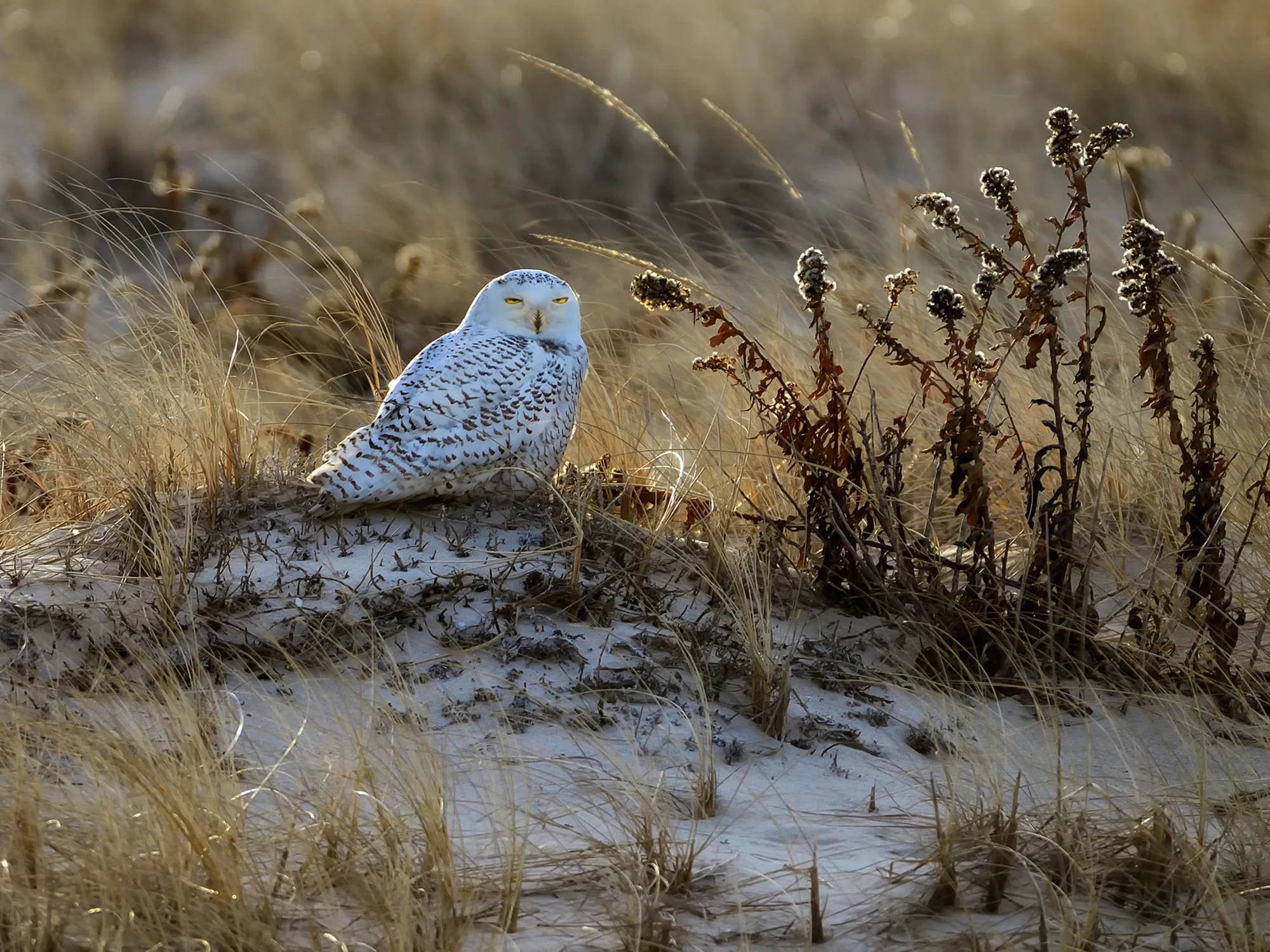
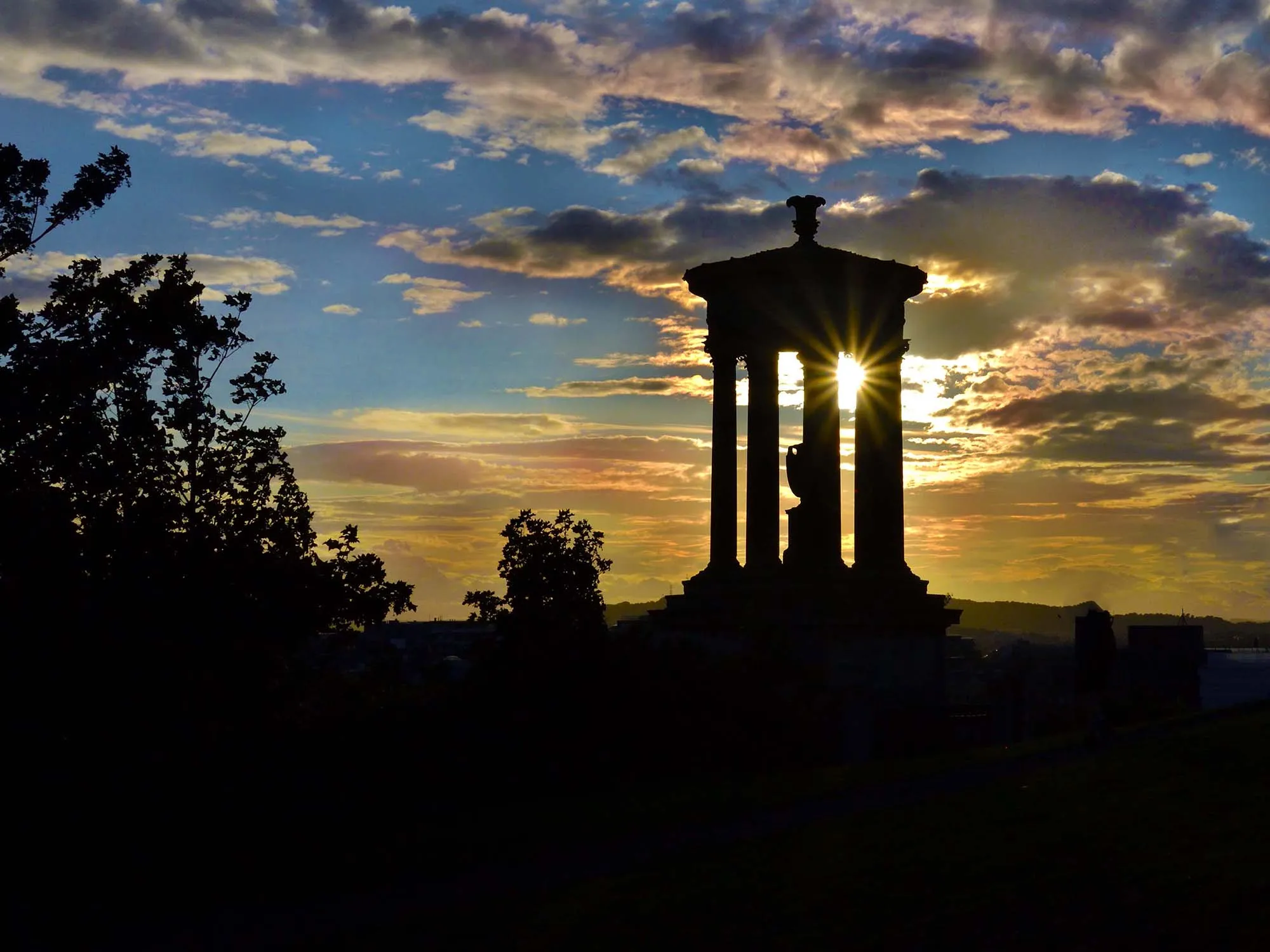
The Dugald Stewart Monument on Calton Hill in Edinburgh Scotland is in silhouette with the sun bursting through an arch. The snowy owl is also backlit, taken in the early morning but uses ambient light to fill in the foreground.
Front lighting
where the light is directly behind you. This will not show shadows as they will fall behind the subject.
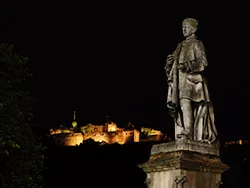
In this picture the statue is lit from the front, it also is exhibiting a rule of space, allowing the statue to look into the image. Edinburgh Castle in the background is also exhibing some front lighting.
Side lighting
(left or right) Good for showing and creating space for the subject in your image to occupy.
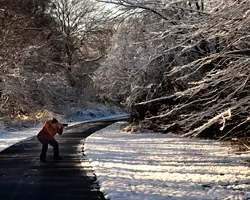
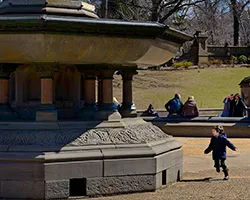
You can see with the child running around the fountain that the shadow is to the left showing that the light source is coming from the opposite side. Similarly with the image on the right, the sunlight is coming through the trees from behind me casting long shadows in front of me.
Light Sources
The items mentioned above depend on the light source, the distance and angle it's originating from. For light sources there are two kinds: natural and artificial.
Natural Light
This generally refers to sunlight or moonlight. But it can also refer to ambient light that is not able to be influenced. This kind of light can be found in cities or large indoor rooms where there are many light sources.
Artificial Light
Artificial light is light that can be controlled regarding its color, intensity (the strength or the distance from the subject), quality (diffused or concentrated) and direction.