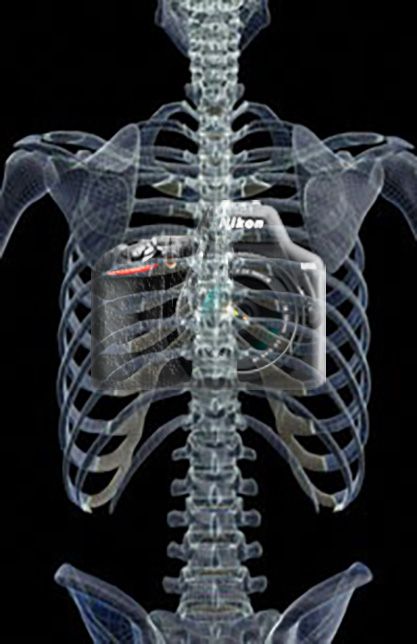
It's Halloween. oooooh, scary. Do you know what's not scary? Taking pictures. If you have a camera, any camera that takes pictures, you've already got what you need to get started. Nothing scary about that.
Let's strip photography down to the bare bones. Forget the expensive equipment, the accessories, and the latest technology for a moment. At its simplest, photography requires a camera, something that catches your eye, and the decision to capture it.
Gear Can Improve the Image, Not the Idea
You don't need a tripod, a high-end camera, or the best lens available to take pictures. Equipment can make a noticeable difference in technical quality, but an interesting cellphone image can have far more visual impact than a technically flawless photograph made with expensive gear. A better camera or sharper lens can improve the technical result, but it can't guarantee that the result will be interesting, have meaning or tell a story.
What Are You Trying to Share?
Have you ever said to someone, "Oh, you should have seen it!" That’s the story and the reason for taking the picture. You experienced something that made an impression on you, and you wanted someone else to experience at least a little of it. The photograph becomes a way of sharing that experience.
It might be a story, a feeling, a fleeting moment, or simply something you found beautiful. Sometimes the light was beautiful, the colors worked together, or something made you smile. You don't owe anyone a deeper explanation; the reason doesn't have to be profound or even explainable.
Pay Attention to Your Own Reaction
Before worrying about the camera, the lens, or the settings, think about what made you stop and look in the first place. Then ask yourself whether your photograph captured it. That's where learning to see begins. What makes you want to show it to someone else? Ask yourself what drew you to the scene in the first place. Does the photograph show that? Sometimes you take a picture, look at it later, and think, "So what?" That's useful, too. Recognizing that an image didn't quite capture what you saw in the moment is part of learning to see.
Different Purposes for Every Photo
Photographs serve many purposes:
- Some tell a story.
- Some preserve a memory.
- Some capture beauty that is difficult to explain.
- Some are experiments, records, or happy accidents.
And some simply don't work.
A photograph doesn't need to justify itself. It helps though, to recognize the difference between an image that matters to you and one that doesn't quite deliver what you hoped.
Strip photography down to the bare bones, and what remains isn't the equipment. It's your ability to notice something, recognize why it caught your attention. Maybe there's a story, a feeling, or simply something you like. The camera is simply the tool that helps you do that.